Africa must build leadership capacity as food systems enter critical decade
10th February 2026 by AGRA

Leadership initiatives in Africa have joined efforts to marshal resources to upskill over 25,000 food systems leaders. This critical mass of leaders will be essential to deliver the ambitious goals outlined in the continent’s new agricultural development strategy, the 10-year Comprehensive Africa Agriculture Development Programme (CAADP) Kampala Declaration.
The Kampala Declaration kicked off on 1 January 2026 and stakeholders concur that this is the moment to scale investments in food systems leadership as a continental movement. The aim is to create a visible, collaborative community that can champion leadership as a cornerstone of Africa’s agrifood transformation.
“The targets contained in the Kampala document require a coordinated push from actors across the food system and will depend as much on leadership capacity as on policy and financing. We have evidence that leadership multiplies the effectiveness of technical programmes, financing mechanisms, and innovation pipelines. We must scale and resource it to match the ambition of the decade, ” said African Food Fellowship Executive Director Pascal Murasira.
Passed by the African Union last year, the Kampala Declaration sets ambitious goals for the next decade, including a 45% increase in agrifood output, a 50% cut in post-harvest losses, a tripling of intra-African agrifood trade, and a rise in locally processed food to 35% of agrifood GDP. It took effect on 1 January 2026 and will run until December 2035.
Food systems leadership initiatives approximate that spending USD25 million per year on leadership programmes over a period of 10 years would equip 25,000 cross-sector leaders with the mindset, skills, tools and networks they need to turn ideas, investments and policies into action.
Africa’s food systems are entering a decisive period, with governments, regional bodies and development actors agreeing that the continent’s ability to meet its 2035 goals is no longer hinged on just technical interventions, but on building the leadership capacity required to translate ambition into impact.
While efforts to raise funding for agriculture are intensifying – including an aim by the CAADP Kampala Declaration to mobilise USD100 billion in public and private financing by 2035 – funding alone will not deliver the desired outcomes without capable leadership to direct resources effectively. The strategy calls for at least 10% of annual public expenditure to go to agrifood systems and for 15% of agrifood GDP to be reinvested into the sector each year. But much of this will hinge on whether institutions have the leadership capabilities to absorb and utilise these funds.
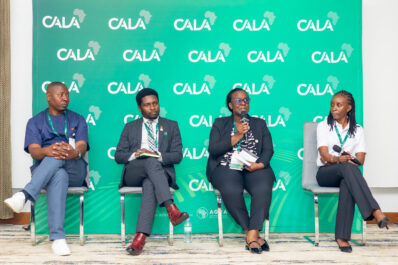
“The Kampala Declaration marks a shift away from narrowly technical solutions toward people centred, systems-based approaches. This includes strengthening leadership at all levels – from community-based organisations and SMEs to policymakers and research institutions. Leaders are often the connectors who turn bold ideas into action, and this is a timely opportunity to deliberately invest in and scale that leadership,” said Ms. Lilian Githinji, Senior Specialist Institutional Strengthening & Centre for African Leaders in Agriculture, CALA at AGRA.
Several Food Systems Leadership initiatives are already operating across the continent. Programmes run by organisations including African Leadership University, African Food Fellowship, Centre for African Leaders in Agriculture, and African Capacity Building Foundation are equipping agrifood actors with skills in problem-solving, governance, coalition-building, and execution. Early evidence suggests such programmes can improve policy implementation, institutional performance, and community-level results. However, these initiatives must scale and work more cohesively to increase their impact and catalyse a continental leadership movement.
“Food System Leadership is a high-return investment that boosts the impact of technical and financial interventions. Funders and governments can accelerate transformation by backing leadership development alongside traditional programming,” added Ms Githinji.
Related posts
Alumni Spotlight: Leading the Charge for Sustainable Agriculture in Africa
24th October 2023
“Knowledge empowers leaders. It’s the catalyst for change,” says Peter Juma Lugendo, an alumnus of the Centre for African Leaders in Agriculture (CALA) and the President and Chief Operating Officer at Kickstart. Peter’s journey through agriculture is a testament to what can be achieved when visionary leaders are armed with knowledge and driven by a profound purpose.
Through his training, Peter gained a deeper understanding of collaborative leadership and the art of setting SMART goals. These newfound skills supported his goal to create a nurturing environment at Kickstart, where team members thrive and perform effectively.
Alumni Spotlight: Promoting Sustainable Food Systems in Uganda- A World Food Day Special Edition
16th October 2023
In the Pearl of Africa, a determined alumna of the Centre for African Leaders in Agriculture (CALA), Rachel Ajambo, is on a mission to revolutionize food systems and combat global hunger. As the world is celebrating World Food Day with the theme “Water is life, water is food. Leave no one behind,” Rachel’s story serves as a testament to the power of education, collaboration, and commitment.
Rachel’s journey with CALA broadened her perspective on value chain development and food system transformation. With newfound knowledge, she delved into the complexities of managing water for production, a topic deeply connected to this year’s World Food Day theme.
The Centre for African Leaders in Agriculture (CALA) is made possible with the friendly support of: